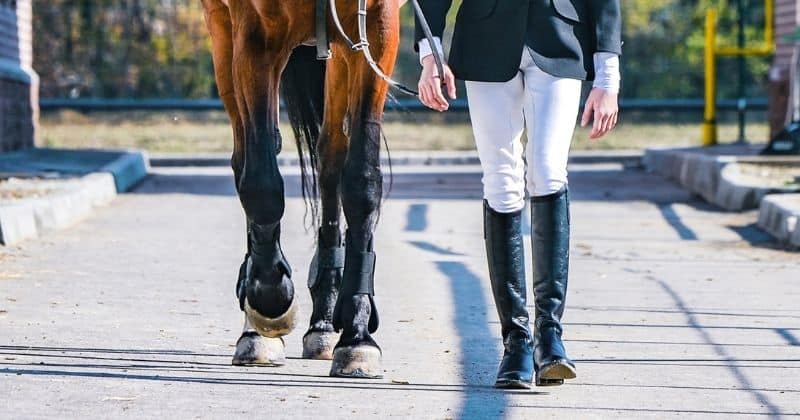
Horses do not have legs
Quick Answer: Horses Have Forelegs and Hindlegs
In common language, people refer to "horse legs," but in equestrianism, a distinction is made between forelegs (front) and hindlegs (back). This is not an arbitrary correction; it helps to better describe support, injuries, shoeing, and protective gear.
If you search for "horse legs," the key idea is this: the front limbs bear much of the weight, and the back limbs provide impulsion. That's why it's important to name them precisely when discussing care or training.
- Forelegs: front limbs; important for support, balance, and braking.
- Hindlegs: rear limbs; crucial for impulsion and jumping.
- Hooves: the structure protecting the end of each limb that requires regular inspection.
Welcome to Rincón Del Valle! In this article, we're going to delve into the intriguing world of equine nomenclature and answer a question that has puzzled many: why are a horse's legs called "forelegs" and "hindlegs"? Join us on this informative journey and discover the history behind this peculiar naming convention.
An Equine Mystery Revealed
Before we dive into the history of why a horse's legs are called forelegs and hindlegs, let's create a small mystery that will keep you intrigued as we explore this fascinating topic.
Imagine this: you're standing next to a majestic horse, observing its front and back legs. Have you ever wondered why, despite being obviously different, they are called "forelegs" and "hindlegs"? What is the reason behind this curious nomenclature? Read on to find out!
The History Behind the Horse's "Forelegs"
Let's start with the horse's front legs, which are known as "forelegs." This nomenclature has its roots in the history and anatomy of the horse. When we observe a horse's front legs, we can notice that they have certain similarities to human hands.
A horse's "forelegs" have bones similar to those in our hands, including the carpus, metacarpus, and phalanges. Furthermore, the hooves of the front legs resemble the nails on our hands. This anatomical similarity led to them being called "forelegs" instead of simply "front legs."
The Horse's "Hindlegs" and Their History
Now, let's shift our attention to the horse's back legs, which are commonly known as "hindlegs." While it may seem strange to call a horse's back legs "hindlegs," this nomenclature also has a historical explanation.
A horse's "hindlegs" are named as such due to the similarity of their bones to those in our feet. The horse's hindlegs contain bones such as the tarsus, metatarsus, and phalanges, which are analogous to the bones of our ankle, metatarsus, and toes. This anatomical similarity led to them being called "hindlegs."
Why Does This Nomenclature Endure?
Now that we have explored the history behind the nomenclature of the horse's "forelegs" and "hindlegs," you might wonder why this terminology has endured over time. The answer lies in tradition and equestrian culture.
Throughout history, the relationship between humans and horses has been fundamental for the survival and progress of civilizations. This relationship has been reflected in the way we talk about horses. The terminology of "forelegs" and "hindlegs" has been passed down from generation to generation and has become an integral part of equestrian culture.
The Secret Behind Equine Limb Wellness
If you own a horse, whether it's your own or on loan, and you want to keep its limbs healthy, it's essential to properly care for its hooves. Our recommendation is the use of high-quality hoof oils, such as Kevin Bacon's Hoof Oil. This oil is specially formulated to hydrate and protect the hooves, helping to prevent cracks and other conditions that can affect your horse's hoof health. Additionally, Kevin Bacon's Hoof Oil also helps improve the appearance of the hooves and keep them flexible and strong.
We hope this article has shed light on this intriguing equine mystery and satisfied your curiosity. At Rincón Del Valle, we are committed to providing useful and valuable information about the world of horses. If you have more questions or want to explore equestrian-related products, feel free to visit our online store at www.rincondv.com.
Thank you for joining us on this journey of equine discovery. Stay tuned for more informative and exciting articles on our blog!
🛒 Looking for quality equipment for your horse?
At Rincón del Valle you will find our entire equestrian selection from the best brands — with fast shipping throughout Spain.
View products →Horse Legs, Forelegs, and Hindlegs: Simple Explanation
Although many people search for "horse legs," in equestrian language, "forelegs" are usually used for the front limbs and "hindlegs" for the back limbs. Understanding this difference helps in better reading care guides, shoeing, protective gear, and movement.
- Forelegs: These are the front limbs and bear a large part of the weight.
- Hindlegs: These are the rear limbs and play a key role in impulsion.
- Hooves: Hoof health affects comfort, support, and performance.
- Protective Gear: Chosen according to work, discipline, and the area to be protected.
You can also continue comparing in these sections:
So, is it wrong to say "legs"?
It's not a major issue in general conversation, but in an equestrian context, it's more precise to differentiate between forelegs and hindlegs. This precision helps when discussing injuries, shoeing, protective gear, or training.
What to Check if You're Interested in Horse Limbs
After understanding the difference between forelegs and hindlegs, the most practical thing is to observe hooves, conformation, sensitivity, and possible rubs. A small discomfort can change the horse's way of moving.
For daily care, check hoof cleanliness, shoeing condition, and the fit of protective boots or overreach boots. If there is lameness, heat, swelling, or pain, it is advisable to consult a veterinarian or farrier.
